
Introduction: The Biggest Digital Marketing Debate
Every business that enters digital marketing eventually faces this question:
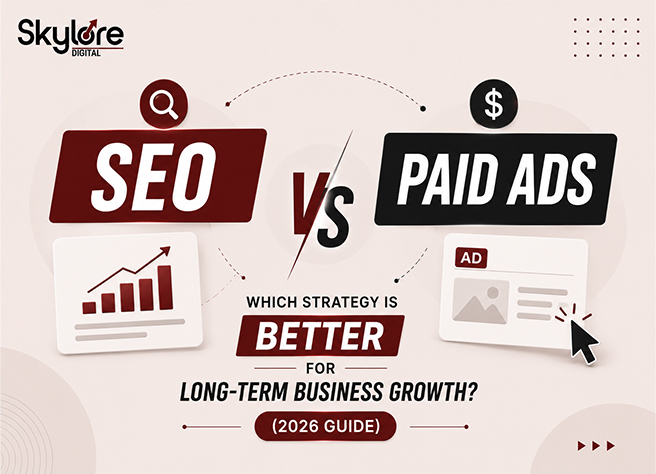
Should we invest in SEO or Paid Ads for long-term growth?
Both strategies can generate traffic, leads, and sales—but they work in completely different ways.
In 2026, with AI-driven search engines and automated ad systems, this decision has become even more important. Businesses that choose the wrong strategy often burn budget or struggle with inconsistent growth.
This guide breaks down SEO vs Paid Ads in detail so you can clearly understand:
- What each strategy does
- How they work
- Their advantages and limitations
- Which one is better for long-term growth
- And how to combine them for maximum ROI
1. Understanding SEO (Search Engine Optimization)
SEO is the process of improving your website so it ranks organically on search engines like Google.
Instead of paying for clicks, you earn traffic by creating valuable and optimized content.
How SEO Works:
SEO focuses on:
- Keyword optimization
- Content quality
- Backlinks
- Technical website performance
- User experience
Google evaluates your website and ranks it based on relevance and authority.
Types of SEO:
1. On-Page SEO
- Content optimization
- Keywords
- Headings
- Internal linking
2. Off-Page SEO
- Backlinks
- Brand mentions
- Authority building
3. Technical SEO
- Website speed
- Mobile optimization
- Indexing and crawlability
Key SEO Benefit:
Once your page ranks, it can generate free traffic 24/7 without paying per click.
2. Understanding Paid Ads (Google Ads, Meta Ads)
Paid Ads are a model where you pay to show your ads on search engines or social media platforms.
How Paid Ads Work:
- You create a campaign
- Choose keywords or audience
- Set a budget
- Ads appear instantly
- You pay per click or impression
Popular Paid Ad Platforms
- Google Ads
- Facebook & Instagram Ads
- YouTube Ads
- LinkedIn Ads
Key Paid Ads Benefit:
You can get instant traffic and leads within hours of launching a campaign.
3. SEO vs Paid Ads: Key Differences
Here is a clear breakdown:
| Factor | SEO | Paid Ads |
| Speed | Slow (3–6 months) | Instant |
| Cost | Low long-term | High ongoing |
| Traffic Type | Organic | Paid |
| Sustainability | Long-term | Stops when budget stops |
| Trust Level | High | Medium |
| Scalability | High over time | Limited by budget |
| ROI | Very high long-term | High short-term |
4. SEO Advantages (Why It Wins Long-Term)
1. Long-Term Free Traffic
Once your website ranks, it keeps bringing traffic without paying for every click.
2. Builds Trust and Authority
Users trust organic results more than ads.
3. Compound Growth Effect
SEO builds over time. The more content you publish, the stronger your domain becomes.
4. Better ROI Over Time
After initial investment, traffic becomes essentially free.
SEO Challenges:
- Takes time to show results
- Requires consistent effort
- Google algorithm changes can affect rankings
5. Paid Ads Advantages (Why Businesses Love It)
1. Instant Results
You can start getting leads within hours.
2. Highly Targeted Traffic
You can target:
- Keywords
- Location
- Age
- Interests
- Behavior
3. Easy to Scale
If a campaign works, you can increase budget and scale quickly.
4. Full Control
You control:
- Budget
- Audience
- Timing
- Messaging
Paid Ads Challenges:
- Costs increase over time
- Traffic stops when ads stop
- Requires continuous optimization
6. Which is Better for Long-Term Growth?
The Honest Answer:
SEO is better for long-term business growth.
Because:
- It builds authority
- It creates sustainable traffic
- It reduces long-term marketing costs
- It compounds over time
However, SEO alone is not enough for fast growth.
7. The Winning Strategy: SEO + Paid Ads Together
The smartest businesses in 2026 do NOT choose one.
They combine both.
How the Hybrid Strategy Works:
Step 1: Paid Ads for Instant Leads
- Generate immediate traffic
- Test keywords and audiences
- Validate offers
Step 2: SEO for Long-Term Growth
- Build content ecosystem
- Rank for high-value keywords
- Reduce dependency on ads
Step 3: Use Data from Ads to Improve SEO
- Find converting keywords
- Identify customer intent
- Build SEO content around winning topics
Result:
- Fast results + long-term stability
- Lower cost per lead over time
- Strong brand authority
8. Real Business Example (Simple Explanation)
Imagine a new digital marketing agency:
With only Paid Ads:
- Leads come fast
- But costs increase monthly
- Growth stops when ads stop
With only SEO:
- No leads for first months
- But strong traffic after ranking
- Long-term stability
With SEO + Paid Ads:
- Immediate leads from ads
- Long-term organic traffic from SEO
- Maximum ROI over time
9. Future of SEO and Paid Ads in 2026
In 2026, both SEO and Paid Ads are evolving due to AI:
AI Impact on SEO:
- Content ranking becomes more intent-based
- Quality signals matter more than keywords
- Topical authority is critical
AI Impact on Ads:
- Smart bidding dominates
- Audience targeting is automated
- Creative optimization is AI-driven
Conclusion
SEO and Paid Ads are not competitors—they are two different growth systems.
- SEO = Long-term asset building
- Paid Ads = Fast acquisition engine
If your goal is sustainable business growth, SEO is the foundation.
If your goal is quick leads and fast revenue, Paid Ads are essential.
But the real power lies in combining both into a unified digital strategy.
FAQs
1. Is SEO better than Paid Ads?
Yes, for long-term growth SEO is better because it generates sustainable organic traffic.
2. Are Paid Ads worth it for small businesses?
Yes, Paid Ads are great for quick leads and testing offers.
3. How long does SEO take to show results?
Usually 3–6 months depending on competition and content quality.
4. Can SEO and Paid Ads work together?
Yes, combining both gives the best ROI and faster growth.
5. Which is cheaper: SEO or Paid Ads?
SEO is cheaper in the long run, while Paid Ads require continuous spending.